Se afișează postările cu eticheta carti / reviste: cronica profanului. Afișați toate postările

22 februarie 2021

Netflix and European identity

I rarely write about movies, and I think that this is the first time in ages that I write about series. However, this is rather about the role of Netflix in connecting European countries through their series. 

First, there is Into the Night (thanks to Tinca for recommending the movie), a post-apocalyptic Belgian series, based on a 2015 Polish SF novel, spoken in French, Italian, Polish, Russian, Arabic, English, Flemish (or Dutch??), and Bulgarian. Indeed, this is a kind of pan-European selection. Probably not the best shot movie, but with a decent script, quite appealing twists, and realistic scenes. I really enjoyed the first season (6 episodes), in which people are put in unexpected setups, social relations are on the verge, and characters need to reinvent themselves. I have saw one of the actors, Laurent Capelutto in the French movie by Hirokazu Kore-eda, La Vérité. The entire plot includes constant reference to European diversity, which made me start the post with Into the Night. Beyond the SF pretext (which is kept at minimum), and the situation that sometimes remind of Lost, there is the message that people can act in a good way, despite their hidden tumultuous past. And there is the recurrent theme, derived from the permanent switching of language, of being European, that is diverse, and that diversity does not impede community to build up. 


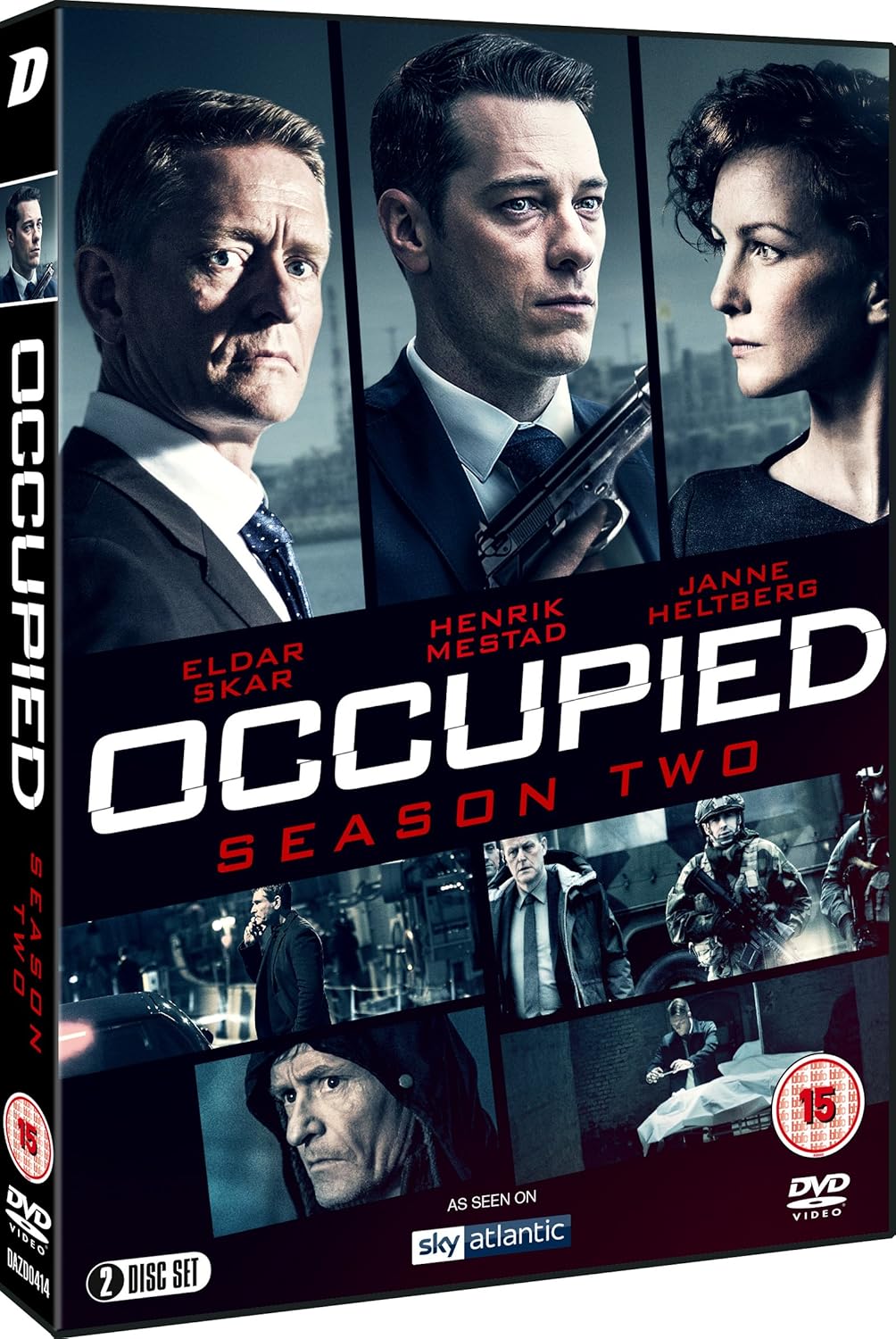
Second, I mention Occupied, a Norwegian alternative-contemporary-history movie, played in Norwegian. Addressing ecological themes, this dystopia is actually a 3-season series on politics, including a few policier sub-plots (one can retrieve Stieg Larsson's influence). It follows the constant dance of the Norwegian politics, when the country cuts energy supply from oil, to switch to a new power source, under a green government, and Russia occupies Norway at the EU request. Placed in our times, it is played in Norwegian, English, Russian, with scenes in French, Polish, Ukrainian, German and so on, and filmed in locations that are virtually placed across the continent (however, the main action shows Norway, and sometimes its very nice landscapes). Again, the recurrent theme is European identity and European politics. And it addresses pan-European common debates such as gender identity, tolerance and xenophobia, and solidarity.


Third, I remark Tribes of Europa. This is the poorest as plot out of the three series that I include in this enumeration. Tribes of Europa is also post-apocalyptic, and not very creative. It replicates somehow Revolution, the American TV series. A mysterious blackout in December 2029 leads Europe to a conglomerate of clans, tribes, and military states. Played in German and English, it includes at least one swear in Romanian: Du-te dracului! (I have seen only the first few episodes, maybe some other languages are incidentally used). English comes as main communication language between various tribes, including the ones that normally speak German, and people move almost freely from a place to another in a way that reminds of the Roman Empire. Also, the German dominant language of the movie is “augmented” with words taken from English, or with Slavic and Scandinavian origins. As a side note, beyond the violence similar to another series - The 100, let observe the discussion on gender roles, honor and treason, family relations, reinvention of love in times of total uncertainty and enduring war, and harsh inequality, along with slavery and oppression. 

At least through such series, apparently with no intention in this regard, Netflix does a great job to consolidate a common European identity and to bring forefront the themes on the European agenda. Somehow, it replaces lack of face-to-face interaction and traveling across the continent, and reduces the fragmentation brought by proliferation of social media bubbles, rebuilding bridges between the later ones. From another perspective, it also becomes visible that EU filmmakers have now an almost unexpected sizeable market where they can compete with American, Indian, and Chinese ones. 

And the movies are easy to consume, both when you are cold and rational as a stone, or when their Romantic sub-messages of love bringing hope touch your heart. And they are better when one combines the two ... moods ;)

8 februarie 2015

Orașul sacrificat, Lucian Vasile, 2014

De ce ar citi cineva o carte despre Ploiești?
Răspunsul e ușor de formulat menționând câteva dintre atuurile cărții lui Lucian Vasile:
- Este un text atent construit, despre viața socială, nu despre război.
- Ploieștiul constituie pretextul, dar cartea povestește de fapt despre cum trăiau oamenii, despre ce scria presa în anii 1940.
- Documentarea este impresionantă.
- Sunt deconstruite (implicit) mai multe mituri despre conlucrarea româno-germană, despre imaginea mareșalului Antonescu, despre raportarea ploieștenilor la război, despre viața publică a epocii.
- Poți avea surpriza să constanți că azi, după 75 de ani, lucrurile sunt pe alocuri la fel.
- Cartea aduce în prim plan o Românie practic ascunsă deopotrivă de regimul comunist, dar și de naționaliștii ce l-au precedat și de cei activi azi, care nu aveau și nu au nici un interes să se știe despre existența ei.

Părțile slabe ale volumului:
- Nu include nicio hartă. Și dacă ești ploieștean poți avea mari dificultăți să recunoști locurile. Cred că era utilă o hartă schițată a localității în timpul războiului, una a localității din anii 1960, și una de azi, așezate în pagină în așa fel încât să le vezi pe toate trei în același timp și să poți compara. Apoi, pentru părțile esențiale ale localității (Centru, Gara de sud, Bulevardul, Bariera Bucov, Rudului, Calea Câmpinii, Calea Oilor) putea fi puse hărți detaliate ale vremii, identificând și clădirile și străzile din index. Pentru Centru merita inclusă și cea de azi.
- Lipsește capitolul cu viața în celor refugiați în jurul Ploieștiului. Zona comunelor suburbane, dar și Filipeștiul și, mai ales prin tematica volumului, până la Câmpina, meritau un pic mai multă atenție, mai ales că autorul trimite uneori către ele (de exemplu, când vorbește despre dificultatea de a găsi un fotograf în oraș, spune că unul era refugiat la Filipești, altul în altă parte etc.)
- Fiind un volum în regie proprie, nu are parte de o tehnoredactare atentă. La 2-3 pagini distanță mai găsești un cuvânt ortografiat greșit, o frază neterminată…

Concluzia mea după această cronică succintă: cartea merită citită, iar lectura ei este una rapidă. Dincolo de valențele ei pentru cultura generală și petrecerea plăcută a timpului, eu aș vedea-o ca bibliografie obligatorie pentru studenții la istorie, sociologie, asistență socială și științe politice.

Lucian Vasile. 2014. Orașul sacrificat. Al Doilea Război Mondial la Ploiești. București: AEDU. 
(Mai multe despre carte și despre cum o puteți procura: RepublicaPloiesti.net.)

6 noiembrie 2014

Ian McEwan - Children's Act

Ian McEwan - Children's Act, 2014
Random thoughts about the novel:

1. This is that kind of book that reminds you what justice is about.

2. Another of Ian McEwan's introspections into what is life and how we use it.

3. A quite predictable silent switch for McEwan 's interests. This time the focus is on what some times ago it would have been called elder age. But in OUR contemporary world, being in your sixties is to live a second youth. I would say that this is the main message of the book: longer life doesn't mean a calm and long retirement; new challenges are to answer, new things to experiment, new situations to cope with, and love, fears, wisdom are always there, since we are still human and ... pretty much alive .

4. As always, McEwan's book is a fresco of small things that makes the real life lovely. I do wonder how my daughter would read this book 20 years from now, knowing what her parents went through , maybe understanding them better than they actually do right now, and knowing how society changed since.

5. Yes, McEwan would deserve a Nobel ;). However, not for this novel, which I found less convincing. The theme is exciting, but McEwan did not manage to accomplish a text of the same high level that we were used to retrieve in its novels. Some more refinement of the intrigue would have been required in my opinion.

Now, if you need a spoiler, read these keywords: 60 years old couple, divorce, euthanasia, children, custody, justice and religious beliefs, childlessness, children rights, justice and ethics, life as a judge, open marriage.

The book is structured on several plans, but they simply interpenetrate and support each other in building a coherent argument and delivering the main messages. Nevertheless, McEwan does net provide solutions, but rather formulates questions and points to fundamental dilemmas that humankind is currently facing.

If you are prone for more spoilers, check out these links : transblawg (includes reference to the enthusiasm with which the British legal community received the book), Maggie Galehouse's Bookish, and a video presentation by McEwan himself.

My rating for the book: 6 out of 10.

18 august 2014

Magda Cârneci, FEM

Magda Cârneci, FEM; Cartea Românească, 2011

Am început FEM deosebit de încântat de savoarea modului de a scrie, de iscusința cu care imagina metafore pentru a descrie stările prin care trece eroina. Mi-a plăcut mai apoi jocul prin care reconstruia gender-ul, prin care discuta despre femei, bărbați și relațiile lor sexuale şi non-sexuale.

Mă gândeam că am găsit un nume important al inteligenției românești care scrie romane pe bune, adică produce acele cărți rare pe care editurile mari le publică și pentru calitate, nu doar fiindcă autorul este băiat simpatic și de gașcă, iar critica nu le ridică în slavă doar pentru serile petrecute cândva împreună.

Cartea s-a dovedit a nu fi una deosebit de dinamică, numeroasele epitete şi luxul de trăiri domolindu-i ritmul. Realismu-i şi mai ales sofisticarea-i reușesc însă să-i reducă din senzația de lentoare şi să o transforme într-o lectură plăcută.
 
Ușoara dezamăgire vine însă din repetarea la infinit a temei, din faptul că autoarea se pierde (după părerea mea), mai ales spre final, într-o simbolistică prea ambiguă, cu metafore incerte, ce lasă impresia de a fi acolo pentru a ieși numărul de pagini.

Altfel însă, ideea cărții - rememorarea propriei vieți, a istoriei relațiilor personale, într-un moment critic al relaționării în sine - m-a surprins plăcut prin modul de concretizare. Cartea se structurează ca exercițiu de autocunoaștere. 

Mie mi s-a părut forțată afirmația că e vorba de o introspecție a arhetipurilor feminine. Pe de o parte, nu am văzut unde ar fi acea distanță de gen care le-ar defini drept feminine. Mai degrabă, am simțit în cele citite despre carte, obsesia feministă de a defini cele două sexe ca fiind complet diferite. 

Pe de altă parte, așa cum remarcă Chinezu, m-a mirat lipsa de curaj a autoarei de a pătrunde în spațiul contemporan, și de a adresa teme și contexte tipice ultimelor două decenii. Aceasta ar fi putut da o altfel de dezvoltare a cărții, evitând senzația că sunt pagini ce au fost folosite pur și simplu ca plombe, pentru a ieși la număr.

Ca să sintetizez: cartea e interesantă, peste media literaturii românești contemporane, scriitura nu e rea, vă îndemn să o citiți. Nu vă așteptați totuși la o realizare de top. Nota mea: 6 puncte dintr-un maxim de 10.

Pentru cei ce vor să vadă și alte opinii, nu așa profane ca ale mele, iată câteva linkuri (atenție, majoritatea conțin spoilers):
CONTRA: Chinezu, Rontziki

18 iunie 2014

Nick Hornby, About a Boy

De ce or fi tradus About a Boy în limba română prin Totul despre băieți, nu știu. Cert este că destul de recent am început să povestesc cu un interlocutor grozav despre cartea lui Nick Hornby, pe care nu o știa. Cum și eu am citit-o cu zece ani în urmă (cartea e scrisă în 1998), am simțit nevoia unei actualizări. Așa că am văzut filmul, făcut prin 2002, cu Hugh Grant în rolul principal. Filmul însă, deși nu e rău, pare rău dacă ai citit cartea, ca mine, acum zece ani. M-a dezamăgit că regizorul a mutat un pic centrul de interes, chiar fără a schimba prea mult acțiunea. Perspectiva mi s-a părut un pic diferită, punând accentul pe Marcus, când mie îmi venea în minte mai degrabă Will ca prototip…

Dar nu vreau să vă dau spoilere. Cartea mi s-a părut excelentă (acum vreau să o recitesc, să văd ce părere am după ce am depășit vârsta personajului principal). Are un umor de calitate, din școala britanică a lui Lodge și Smith, dar nu la fel de spumos. E un roman foarte profund ca mesaj, ca întrebări pe care și le pune despre lumea contemporană, despre familie și prieteni, despre muncă și cunoaștere, și mai ales despre maturizare, despre cum unii devin adulți mai repede, alții mai târziu, despre cum oamenii sunt diferiți și despre cum lumea se schimbă permanent dar oamenii rămân aceiași. Iar ca scriitură, ce să vă spun, se citește pe nerăsuflate!

Prin urmare: citiți cartea, merită (îi dau nota 9 din 10, așa de tare mi-a plăcut).

Iar dacă v-a încântat Hornby, nu ratați nici Turnul sinucigașilor.

Iar dacă nu citiți cărți, nici filmul nu e de lepădat, într-o seară liniștită, după campionatul mondial de fotbal …


PS. Din film, s-a făcut și serial (pe NBC), care tocmai a fost confirmat pentru un al doilea sezon. Nu l-am văzut, dacă aveți idee cum e spuneți-mi și mie vă rog!

11 iunie 2014

Povestiri de pe Calea Moșilor


Adina Popescu. Povestiri de pe Calea Moșilor, Editura Casa de Pariuri Literare, 2014.

Unu la mână, nu prea citesc povestiri dacă nu sunt SF. Pur și simplu le evit, nu aș putea să explic de ce. Doi la mână, nu prea merg la lansări de beletristică.

Așa că e greu de știut cum se face că, în aprilie, abia revenit în București, am mers la lansarea cărții de care vorbesc aici. Poate eram curios să văd cum un autor de reportaje scrie o carte de povestiri? Poate m-a atras subiectul?

Nu știu să răspund exact, dar, în orice caz, a fost o bună alegere. Mi-a plăcut locul, Librăria Bastilia, cu cotloanele ei dintr-o casă veche din Piața Romană, cu cafe-barul de sus, unde a avut loc lansarea. Fără îndoială, mai degrabă o librărie de fițe decât o librărie unde iei cartea în mână, stai nițel pe fotoliu citind, mai răsfoiești încă una și apoi alegi ce vei cumpăra. Pentru o lansare de carte însă a fost o bună alegere.

Mi-a plăcut textul dintre coperți. După capul meu, cartea nu este despre Calea Moșilor, ci despre copilărie și adolescență, așa cum erau ele la sfârșitul anilor 80 și începutul anilor 90, despre cum ochii copilului de atunci vedeau schimbările postcomuniste și cum își reinventau reperele. Nu e tocmai generația mea, dar nu e nici departe de mine. Nu e la fel ca școlile în care am fost, acasă, în Ploiești, adică în orașul care are de mult o monografie, după cum remarca Mircea Vasilescu la lansarea amintită.

Asta nu a împiedicat volumul să aibă parte la această lansare și de o proiecție video, cu câte reportaje alb-negru despre Calea Moșilor. Din păcate nu le-am văzut postate și pe pagina de Facebook a proiectului. Dădeau un farmec aparte vieții din povestirile Adinei Popescu, fixând mai bine contextul.

Cartea, pe care am citit-o repede, e mai degrabă un roman decât o colecție-de-povestiri-cu-aceleași-personaje-ordonată-cronologic. Stilul se schimbă odată cu vârsta personajului principal, dar rămâne același tip de reportaj cu care ne-a obișnuit autoarea, ceea ce face ca eticheta de roman să fie într-adevăr superfluă.

Cum ziceam, mie mi-au plăcut și lansarea, de la care am fugit imediat ce vorbitorii au terminat ce aveau ei de spus, cu har; și cartea, interesantă ca reportaj despre cum am trăit cândva; și locul. Am vrut să scriu acest post imediat după ce toate s-au întâmplat, dar poate că e mai bine că o fac abia acum, când timpul a mai decantat lucrurile.

Dacă mă întrebați pe mine, valoarea principală a volumului stă în calitatea sa de document social, de mărturie a unei lumi apuse, chiar dacă ea încă mai trăiește în sufletul și mintea celor ce am trăit-o. Într-un fel, e un soi de Cișmigiu et co., dar un pic la altă scală. Ce nu îmi dau seama este dacă cele spuse acolo mi s-au părut „mișto” doar ca efect al generației din care fac parte, sau doar ca deformare profesională… Vă las să o descoperiți singuri ;)

29 noiembrie 2013

The Marriage Plot

Published in 2011
In The Marriage Plot, Jeffrey Eugenides tries a role that barely fits his style. He deconstructs every single thought, gesture, action of his main characters, explaining and over-explaining them, until they almost completely lose meaning. If it had been not about Eugenides, finishing the book would have been unlikely in my case. However, I continued to the last page. By the end, patience got partly rewarded. One might be bored of insisting on semiotics and the sometimes trailing story, but one needs to get to the second half, and then to the end, to rediscover a great writer, although not in his best creation.

My rating: 5 out of 10 (the novel should have been shorter).


Book cover retrieved from the review that The Telegraph did to the book.

15 noiembrie 2013

Julian Barnes, A History of the World in 10 1/2 chapters

In his account of the history of the world (first published in 1989), Julian Barnes gives plenty of proof for his creativity, and provides a resistance tour as storyteller.

The book does not look like a novel, and maybe it is not. It starts with Noah and his Ark, seen in an apparently comic perspective. Despite vivid humor, the author addresses most of the common (theological) debates related to the Ark, deconstructs them, and basically reduces them to ashes, in a subtle way that churches cannot easily attack, although they would never admire.

A set of other 9 story add, with the Ark as recurring leitmotiv ("supporting character"), religion as (sometimes almost invisible) common ground, and intrigues that happens in completely different places and times, and with totally different actors. Sometimes, the author becomes a voice by himself, sharing opinions with the reader, and arguing them with facts, and the book seem to turn in an unsystematic investigation about the sense of history, as expression of the collective memory.

Fiction adds to real facts, an unexpected twist occurs in chapter ... (but I better avoid spoilers!), to subtly support author's view on religion, history, life as a whole. (However, I did not find really inspired the metaphor in that chapter).

The presence of fiction, of embroidering the main motives, makes me wonder if this collection of short stories might not be rather labeled as a novel. Beyond such petty distinction, it remains an excellent book, from an excellent writer.

my rating: 8 out of 10.

31 octombrie 2013

Intrusion, by Ken MacLeod


This book has an interesting idea and explores several appealing transformations that current technology may inflict to human life. Published in 2012, the novel anticipates the PRISM debate, addresses fashionable themes like manless cars and drones, Google-style 3D glasses, along with tachyons, genetically engineered plants and landscapes, the justice system, the future of work, and gender relations.

Written by a declared Trotskyist, the depicted story describe a rather conservatory world as compared to what one may expect from a socialist utopia. However, it might be the case that Trotskyists become conservative when aging, as the whole Romanians communist regime did, for instance.

MacLeod did a good job in choosing fashionable themes. The relatively vivid story also helped Intrusion to receive nominations for most important SF awards of the year. Somehow similar in its intentions to Orwel's 1984, the book also reminds that SF is often more sophisticated than mainstream literature, and rejecting it by default (as Mălina or Monica do :p) is not a bright attitude.

However, MacLeod loses when considering proper documentation. He inserts a sociologist as supporting character, and refers some classic sociological authors. Unfortunately, the authors fails to consider current sociology, and how nowadays social sciences address the future of work and of gender relations. Since the plot is placed in a near future, this makes the story unrealistic, from its very beginning.

My rating: 5 out of 10.
Other opinions: Cory Doctorow; Ruth Ludlam (with some spoilers).

4 octombrie 2013

the F... word ;) [Breaking Bad]

Well, I do not need to comment much on this :))


The image is from the pilot episode of Breaking Bad, an atypical TV series who run for five seasons to be ended this autumn.

Bogdan is an episodic character, owner of a car-washing and garage small business. He employs the main character of the TV series, Walter. The story happens in the southern part of the US. Walter is American, a genius in Chemistry, overqualified for his teaching in a highschool. Underpaid by the school, he finds part-time employment as a non-qualified worker for Bogdan, a Romanian immigrant. The better off Romanian uses the phone to talk with some co-ethnics, therefore one may even hear some spoken Romanian in that episode!

[the series is quite good, with a nonlinear action, realistic characters that transform from a season to another, and not so many episodes. A little bit too violent sometimes, but otherwise entertaining, at least in the first two seasons - I have not seen all the series, yet, but there are good signs. One might also want to know that Breaking Bad's growing audience in the US rocketed to a Top 3 record in TV history for the September 2013 finale. I thank Cătă for pointing me to the series some months ago.]

9 august 2013

O altfel de istorie … a fotbalului românesc (şi nu numai)

Mă gândeam să las postarea asta pentru a doua parte a lui august, dar meciul de aseară de la Arnhem o face mai mult decât potrivită.

Cartea de care vorbesc poate părea bizară: este în esenţă istoria unei echipe – Juventus Bucureşti – care aparent nu mai există sau poate o fi acea Juventus Colentina??? În fapt e mult mai mult decât atât. Echipa nu doar că există, dar anul acesta a câştigat din nou cupa, a treia din istorie, fiind de patru ori şi campioană a României. Un singur titlu a fost cucerit sub numele de Juventus, restul fiind adjudecate după mutarea la Ploieşti.

Juventus, o echipă privată înfiinţată la Capşa prin contopirea a două alte cluburi bucureştene, cu italieni între membrii fondatori, a fost cândva un nume mare. Istoria ei, şi cartea în sine, este o istorie a fotbalului românesc între 1920 şi 1952. Citiţi şi o să vedeţi cum istoria se repetă, halucinant pe alocuri:
  • structura ligii se schimbă peste noapte, uneori chiar în timpul campionatului;
  • deşi era un spaţiu privat, Carol al II-lea decide rechiziţionarea stadionului pe care juca echipa, şi unde jucase şi naţionala, şi construieşte acolo facultatea de drept;
  • autorităţile comuniste decid că Steaua I şi Steaua II, proaspăt înfiinţate, joacă împreună în prima ligă;
  • sunt echipe ce îşi schimbă numele de câteva ori în timpul sezonului;
  • echipe ce au pierdut în urmă cu două tururi de cupă revin în competiţie la masa verde.
Mai toate acestea se petrec înainte de comunism şi se repetă în timpul său. Dar mai bine citiţi istoria Juventusului şi a mutării sale la Ploieşti. O regăsiţi în cartea lui Răzvan Frăţilă - Petrolul Ploieşti, Istorie şi Tradiţie. Volumul I: Începuturile. Nu vă aşteptaţi la o scriitură fantastică. Autorul nu este un Franzen sau un Lodge, ci e doar contemporanul lor. Fost arbitru de fotbal, Răzvan Frăţilă este un entuziast ce petrece mult timp în arhive, şi scrie decent, covârşindu-te cu informaţii. Iar informaţia este principalul atu al volumului ce tratează momentele critice ce au urmat debutului fotbalului la noi, ce vorbeşte despre viaţa în perioada interbelică şi despre intervenţia (nu chiar atât de disruptivă, în opinia mea) a comunismului.

Cartea costă 65 de lei, având 360 de pagini A4 cu hârtie velină. Sunt multe extrase savuroase din presa vremii, numeroase fotografii, iar capitolul final constituie o colecţie de memorialistică ce vorbeşte mult despre fotbalul şi viaţa de acum 70-80 de ani.

[Tip: editura aparent nu livrează (încă) online, dar experienţa proprie spune că un telefon sau un e-mail la adresele lor de contact rezolvă problema, cel puţin pentru cei aflaţi în România.]

1 august 2013

John Scalzi, Redshirts (2012)

In Redshirts, John Scalzi’s 2012 book winner of the 2013 Locus prize for best SF novel, most of the characters bear English (American) names. However, a minor character is called Flaviu Andreescu. The name, clearly of Romanian origin, is mentioned just twice or so, and the man behind it never actually appears into action. What would this say about Scalzi’s image of Romanians, since the appellative belongs to the only scientist to be present within the book, and Flaviu Andreescu is invoked as an indubitable authority? ;)

Let me also say some words about the book. It is a light SF text, in the sense that nothing is really elaborated, and the action is very close to how SF series look likes. Scalzi seemed to intend deconstructing how TV series are produced. His experience as “creative consultant” for Stargate Universe should have helped him in Redshirts’ attempt to mock TV playscripts. However, Scalzi chose the narrative behind the book to be exactly as the ones that he ridicules, including implausible situations and characters, and easy to guess twists. In my view, this replaces the critic with a sort of bad quality disguised appraisal. And I think that this is what the book is: just another soap opera, with a SF background, meant to sell many copies and to bring good money to the writer. My view probably meets the one expressed by Tudor for CititorSF.ro: there where better books to win the Locus award this year.

If I would grant Redshirts a merit, this is the attempt to introduce a debate about the future of television. However, even this theme is at most sketched and looks rather forged, as a crude material which might have been brilliantly shining, but it’s not.

One question remains unanswered for the moment: when the book would turn into a screenplay? Because it looks that it would surely do.

My rating: 4 out of 10 (10 being the maximum).

PS. The novel is easy enough to be suitable for listening when jogging. Such usefulness added an extra point in my above rating ;)

other oppinions about the novel:

6 aprilie 2013

Leftovers, Tom Perrotta, 2011

Oare ce poți spune despre o carte care se citește pe nerăsuflate și te îndeamnă totodată la reflecție continua? Eu zic că fraza de mai sus e suficientă!

Dacă vreți mai mult despre conținut, vă ofer ca spoiller ceea ce aflați din primele pagini sau de pe coperta: intriga principală te face să te gândești că o să ai de a face cu un SF apropriat ca stil de serialul Fringe. Într-o zi oarecare, o bună parte din populația Americii dispare pur și simplu ca și cum s-ar topi în aer sau ar transcende într-o dimensiune dincolo de puterea noastră de înțelegere.

Partea SF se oprește (din păcate!) aici. Urmează o proză scrisă cu mult har, Perrotta posedând o bună tehnică a scrisului, în care personajul central este, într-un fel, de natura sociologică. ”Aventurile” din carte nu sunt unele holywoodiene, ci mult mai profunde prin semnificații, punând în centrul lor întrebări esențiale despre existența noastră ca ființe umane. 

Evaluarea mea: 8 din 10. (cartea insista prea mult pe o anumită latură, altfel ajungea fără probleme la evaluarea maxima dată până acum pe acest blog, adică 9).

11 februarie 2013

The Void Trilogy / Peter Hamilton


Goodreads re-reminded me today that  about half year ago I started to read Peter Hamilton’s Evolutionary Void, and I should say something about the book. Since it’s Carneval and I am a little lazy, I decided that it is a good reason to spend few minutes writing about the book, in fact about the whole three-volumes-two-thousands-page-SF-trilogy.

So, The Void Trilogy is a space saga, a good quality SF which continues the story of the Commonwealth Series. In the beginning I was somehow disappointed by the three volumes (released in 2007, 2008, and 2010). In my opinion, they do not meet the high standards which define Hamilton’s Confederation Saga and the two volumes from the Commonwealth Saga. Do not get me wrong: Hamilton continues to be the same innovative and creative SF author; he is an excellent story teller, a fantastic manipulator of vivid images. In his previous works, a multitude of stories and characters overlap in a lively succession of parallel actions, to build a complex world, in which the reader gets easily captivated, with few chances to escape before the last page of the last book. The Void Saga makes no difference. It is not a linear writing, but the story is melted using the perspectives of various characters.

The action continues Judas Unchained (if you did not read the Commonwealth Saga, do it, then read this review ;)), but it is placed in time some 1200 years later. Hamilton’s exploits the same three main ideas and technologies: 1) rejuvenation and re-life; 2) fast interstellar connectivity due to Sheldon’s and Ozzy’s wormholes; 3) instant communication and communion due to unisphere. The third one is further enhanced, and sharing a common thinking as a way to evolve becomes one of the main topic in the series. In the three books Hamilton gives the impression that he might deeply investigate the social consequences of using such technologies, but he prefers a softer, more commercial approach. Therefore, although there are incipient descriptions of what world might be, they lack the level of careful particularization that the Commonwealth Saga displayed. Instead, Hamilton prefers a parallel fantasy story, witch introduce another theme, this time almost completely unexplored: time linearity.

I do not think that one needs more details. So, the series is a nice continuation of the previous saga that those who liked the Commonwealth stories should definitively read. However, do not expect much: it seems that we direct towards a commercial francize. This naturally implies slightly lower quality, and less realistic conclusions.

My evaluation: 6 out of 10 (10 is the best). (probably it would have been lower, if I had not liked Pandora’s Star and Judas Unchained).


PS. I keep looking for a place, a sort of common blog, where to join my book reviews. It should accept contributions in not very clean English, as well in a little better Romanian. I have considered Goodreads and Amazon, but I do not like the fact that silly two lines comments and longer reviews are exposed there as comments. I would prefer a common blog, where people make reviews avoiding spoilers as much as possible, the reviews are not synthesis of the action, but rather a sort of contextualization, indicating main themes, the quality of the story, which type of public could taste it, who should not read it, etc. A, and I would prefer to have non-professionals, that is people who write reviews for fun not for money, and can not be suspected to promote their friends or the friends of the employer, as many times happens. If you know such a place, do not hesitate to tell me. I would be interested in it, at least as a reader…

14 ianuarie 2013

Franzen - Freedom (Libertate), 2010

Freedom a lui Franzen este clar o carte bine scrisă. Cu toate acestea, în primele 320 de pagini m-a dezamăgit niţel: mă aşteptam la mai mult. Corecţii şi Al 27-lea oraş stabiliseră deja o ştachetă înaltă şi părea că noul roman nu aduce ceva aparte, în afară de o scriitură plăcută, de subiecte de reflecţie interesante şi de o acţiune suficient de atractivă ca să nu te plictiseşti.

În prima sa parte, volumul povesteşte viaţa studenţilor (americani) din anii optzeci şi modul cum se vedea lumea prin ochii acestora. Tema este evident sensibilă pentru cei născuţi prin anii 1960, începutul anilor 1970, adică fix generaţia mea. Mai apoi lucrurile se mută la studenţii din anii 2000, cu sugestia simplă că aproape nimic nu s-a schimbat la modul fundamental. Între timp am aflat şi cum se zice la pitulice pe engleză: warbler. Descrierile lungi alternează cu dialogurile alerte. Temele adânci, despicând în paişpe firul vieţii de zi cu zi sau al agendei publice mondiale, se regăsesc mai degrabă în dialoguri. Acţiunea se mută în descriere. Tot acolo apar şi trăirile personale, ce construiesc atent personajele principale ca şi caractere.

Primele 300 de pagini par a conduce în acelaşi sens ca şi Solar, cartea lui IanMcEwan, apărută în 2011, construind o imagine imperfectă, realistă, a eroului care se dedică bunului public. Paralela este greu de evitat. Legitimarea ştiinţifică şi activismul ONG-ist sunt deconstruite pentru a indica modul în care lumea progresează neintenţionat sau prin personaje care nu au alură de eroi, care nu sunt lipsiţi de dorinţe, păcate, frustrări, ură, care destul de des nici măcar nu doresc binele celorlalţi, şi care sunt cât se poate de umani….

În a doua jumătate (cartea are 540 de pagini), revine tema centrală a cărţii, modul în care generaţiile curente reproduc sau nu reproduc ceea ce s-a petrecut cu cele dinaintea lor. Cum taţii şi fii, mamele şi fiicele, taţii şi fiicele, mamele şi fii, urmează sau nu aceeaşi cale în viaţă, au aceleaşi succese sau eşecuri, găsesc sau nu aceleaşi rezolvări sau fac aceleaşi greşeli. Ideea este interesantă, chit că nu tocmai originală. Scriitura este de calitate. O lectură nu foarte complicată, mai degrabă uşurică, de la un scriitor care a dovedit că poate mai mult. 

Obama şi Oprah au ridicat cartea în slăvi. Mie mi s-a părut de nota 6 sau poate 7 din 10.

PS. Încă nu m-am decis dacă Walter este cu adevărat un personaj credibil. Nu cred că socializarea sa primară şi experienţa ulterioară de viaţă ar fi putut să conducă la valorile care îi sunt atribuite. Nu este însă imposibil să fie însă unul dintre cei de pe la marginea distribuţiei normale. Caz în care nu avem de a face cu un roman realist, ci mai degrabă cu unul romantic. (Deh, deformaţie profesională!)


Alte opinii:
laudative: Cate Ross (atenţie, include spoilere!), Bucurencicaprincornk13.

30 octombrie 2012

Yann Martel, Life of Pi

I will be really short. This is the only Yann Martel’s book that I red. Yann Martel is a Canadian writer. The Life of Pi is really amazing. Even more amazingly, it won a Man Booker Prize in 2002! In my view, it really deserved it. Even if they made a film out of it (not released yet, not interested in viewing it) it is a really good novel.

The story is vivant despite the lack of variation of the environment. It grows fast in the beginning then it gives the impression that the author lost himself too much into details, particularly when describing zoo gardens and animal habits. However, almost all details come in handy later on in the book. So, if you want more action, after the first hundred pages you will get it. You just need to be patient! If you want epic poetry, it is plenty all over the novel. If you prefer philosophical questions, take a spoiler here: “I don’t see why I can’t be all three. Mamaji has two passports. He’s Indian and French. Why can’t I be a Hindu, a Christian and a Muslim?”. If you prefer romance and erotic stories, or fight and war, then nope, this is not a novel for you. If you like humor, well, in this case, there is plenty all over the book. An educated one!

For me, the book was really nice, and the last 50 pages or so were truly unexpected. I should confess that I quite rarely find a novel to surprise me as much as this did when it came to a conclusion. Therefore, I thank Alexia who recommended the book to Mălina, who said that it is a nice novel that I may enjoy. So I did!

PS1. When reading this post, it is appropriate to use some Hoegaarden’s Le Fruit Defendu beer (yes, it is strong, take only one 33 cl bottle and poor it in a large cup - I used a Leffe glass).  You might also take a look at the bottle which caused uproar in the US, due to the almost naked bodies represented on it – in fact an adaptation of Reubens’ Adam and Eve). Finally, the coriander-spiced Belgian ale goes just nice with some early French organ music, or it did for me when writing this post ;)

PS2. Hint: Do not read Wikipedia’s entry about The Life of Pi! It has too many spoilers. Better read the book!

PS3. A good description of the Forbidden Fruit (the beer :p), in Spanish, is to be found in the blog Para Que Você Cerveza

22 septembrie 2012

Solar

It is useless to say that Ian McEwan is one of those writers that know how to write, master various styles, are very imaginative, have strong clear messages to transmit. In all his novels I had the strong feeling that he really enjoys writing.

Solar , his 2010 book confirms all these. Basically it is a comedy that satirizes academic life, militant activism, consumerism, contemporary relations, mass media, etc. The debut reminds of Tom Sharpe's Wilt series, but Solar is not as rich in comic situations. Instead, McEwan pays a lot of attention to apparently unimportant details, to almost dully aspects of daily life, to intimate feelings that the central character may have towards almost anything, towards every single situation, person or gesture. A reader from the future, let say 200 years from now, would find the book very informative if interested in the early 21st century life.

All these details considerably slow down the rhythm of the book. However, the subtle irony that stays behind them, feeds an enjoyable lecture.

On the other hand, the cornucopian details serve the main goal of the book, depicting piece by piece its message. There is a continuous display of instances on ‘human imperfection’, a ‘large subject’, as the author coins out. Solar switches from comedy to black comedy, and from slow moving description to fast action, arguing on how ordinary every person is, and how humanity actually rely on and consist from regular people and small gestures.

Since the main character of the fiction is a Noble prize winner, if you pardon the pun, I should ask myself when McEwan will finally receive a Nobel…

24 aprilie 2012

David Lodge & HG Wells: A Man of Parts

My interest about HG Wells (see previous post) did not come out of the blue. I have read some of his SF novels and stories as a child. Of course, few were translated in Romanian at the time: the communist regime was not eager to promote deviationist ideas among the citizens. However, the Time Machine and the Invisible Man were enough harmless to pass the censure.

My beloved wife offered me, as Christmas gift, the most recent David Lodge’s book, A Man of Parts, a biographical novel with HG Wells as main character.


My wife did not know that the book has anything to do with HG Wells, but was aware of me liking David Lodge’s novels. Lodge wrote more than a dozen of comic novel, all very hilarious. I think that best known is the trilogy on academic life (Small World, Changing Places, Nice Work*), but the British Museum is Falling Down, Deaf Sentence and all the others are just lovely. Lodge really knows how to write, has always something interesting to describe, has a message, and is very amusing.

I always asked myself if either being university professor and scholar of criticism helped David Lodge to become a writer, or it is just his natural gift.

Anyway, as a novelist, Lodge produced more than pure fiction and comic texts. A Man of Parts is an example. It is probably far from being one of his best works, but it is a good pretext to mention the writer on this blog ;). I really do not know if I like or not A Man of Parts. My opinion is surely biased: as I said, I like both HG Wells and David Lodge. The book is abundant in details about Wells passionate life, even without insisting much on the époque (which I think that is an unfortunate minus). It depicts gradually the pattern of thinking that Lodge considers it was specific to Wells. The story is always reinforced with examples from Wells' books, and from his private correspondence with contemporaries, friends and/or lovers, many of them known writers by themselves. However, these excerpts tend to reduce the rhythm in which the action develops, diminishing the novelistic quality of the book. On the other hand, the fiction-like narrative makes the non-fiction character of the book to be too much dispersed in the 559 pages of the tome.
Romanian edition, Polirom
(in my opinion, the title translation
-literary: The man made of pieces-
could have been better)

I would say that reading the book was quite informative, but not actually thrilling. Probably I would have preferred to have two different volumes: a document-based description and a novel. However, I still have the strange feeling that A Man of Parts is not a bad book?

My evaluation: 5/10.


*For my Romanian readers: The Romanian translations of the titles are slightly different, but one can easily retrieve the books from any online bookshop…

H.G. Wells

Earlier this year I run a sort of poll among people I know. I have asked a little more than a dozen, maybe even twenty, if the name H.G. Wells rings a bell. Less than a handful correctly pointed out the English novelist, member of Fabian society. On the opposite, all of them immediately recognized the name of Jules Verne. I found this both disturbing and unfair. Hence this post on HG Wells.

A sort of iconic figure for the British society, Wells was portrayed as an episodic character in the successful TV series Dr.Who (the 2005 series), and reinvented as a women (which is somehow ironical) recurring as character in the Warehouse 13 series. However, he is much more than a personage common to some TV series. Born in 1866, he lived a passionate life, as a front page actor. Nowadays he is considered as one of the three founding fathers of science fiction, along with Jules Verne and the Luxembourger Hugo Gernsback. The later was an inventive and efficient editor of SF literature. He invented the term, published first magazines, and was at the origin of fandom. Hugo Gernsback was a mediocre writer, therefore the comparison should be done between Wells and Verne.

Both were active approximately in the same period, had excellent literary skills, and were also mainstream writers. Their style was however different. Verne wrote nice adventure stories that everybody knows and have enjoyed during childhood. Captain Grant’s kids and Phil’s Fog balloon travel around the globe, to pick just two examples, were good novels, with lovely plots, exiting adventures, some romance, and happy endings. Their success triggered the popular interest towards the SF writings, in which the author popularized mild inventions such as flying machines, rockets to the Moon, or Nemo’s submarine. All become reality and today everybody knows about Jules Verne. At least everybody who might read this blog ;).

1966 Romanian edition of The Invisible Man
source: http://moshulsf.wordpress.com/
Wells was more concerned with promoting his political ideas, like socialist utopias, and free love. They make good profits for the editors, but were less likely to be fully accepted by public opinion. More, catholic, orthodox, and communist countries were probably not very eager to translate HG Wells. Also, his science fiction contributions were more fantastic than Jules Verne’s. He described a Time Machine (and here is the connection with Dr. Who), an Invisible Man, or Martians invading Earth, during a complicated War of Worlds. There is not much engineering, but more imagination about what can be, and how this would affect life and humanity. All his themes are to be found, in more refined versions in contemporary science fiction literature.

On the other hand, Wells’ personal life involved continuous extramarital relations, and a rather gender-imbalanced approach, according to nowadays standards. However, according to the standards of his time, he was rather an activist for woman rights, and an advocate for a more equal world. His presence in the Fabian society (the ancestor of the Labour Party) was therefore natural. Due to his liberal views on marriage and sexual relations, Wells proved to be too radical even for socialists, even if not in the communist direction.

As I said, personal life and libertine ideas, made Wells less known outside Britain and probably the US. (In the 30s, when radio was a kind of God, they have broadcasted, without any warning, Wells’s story about Martians invading Earth. Many people though it is for true, panicked, get hysterical… A good rehearsal for extreme situations, like the Romanian Revolution in 1989, I would say…)

The most recent David Lodge’s novel discusses HG Wells life, loves, ideas and novels. I will briefly introduce it in the next post.

20 ianuarie 2012

Ținutul hunilor

Uite o hartă politică despre care rar se învață la școală în România: cum arăta Europa prin secolul al V-lea.
Am extras-o din Michael Curtis Ford, Căderea Romei, traducere apărută în 2010 în seria de romane istorice și despre istorie a Editurii Alffa All. (ediția în engleză este din 2007)

[Cartea e mai degrabă un roman istoric decât unul despre istorie: autorul nu e istoric dar a făcut ceva documentare prealabilă; scrie și despre cum trăiau oamenii, dar accentul cade mai degrabă pe date istorice și pe o intrigă romanescă, în timp ce scriitura nu e deosebită.]

Convorbire telefonică cu ... un hoț??

Sună telefonul, de pe un număr necunoscut, vizibil (adică nu este ascuns), iar o voce de bărbat mă angajează în următoarea convorbire: -  ...